
We may earn money or products from the companies mentioned in this post.
I still remember the first time I turned on a faucet and watched a thick, rusty orange stream come out. I was standing in a kitchen, holding a glass, and I froze.
My first instinct was to pour it down the drain and never speak of it again. My second was to start Googling, and that’s where things got confusing. One website said it was completely harmless; another made it sound like an environmental disaster.
After digging into it properly, I discovered something important: both answers can be right, depending on what is causing the problem. Brown or orange tap water can be ordinary iron or disturbed sediment, but it can also point to aging pipes, a failing water heater, or changes affecting a private well.
And here’s what concerned me most: some contaminants that can harm your family are completely invisible. Clear water can contain lead or other unwanted substances, while rusty-looking water sometimes reflects a mainly aesthetic iron problem. That is why identifying the cause matters.
Below are seven likely causes, how to narrow them down, and how to find an appropriate fix without wasting money on the wrong filtration system.
Table of Contents
What Makes Tap Water Turn Brown or Orange?
The most common explanation is iron, rust or disturbed sediment. Think of the inside of an aging water pipe like a riverbed. Deposits accumulate over time; when flow, pressure or water chemistry changes, some of them can break loose and make the water yellow, orange or brown.
The US Environmental Protection Agency (EPA) sets a secondary drinking-water standard of 0.3 mg/L for iron, primarily addressing taste, staining and appearance. Manganese has a secondary aesthetic standard of 0.05 mg/L; elevated manganese can also raise health concerns, particularly for infants. Neither aesthetic standard guarantees that water is safe from other contaminants.
- Orange or reddish brown: often iron or rust.
- Dark brown or black: sometimes manganese or other deposits.
- Yellow or tea-colored: may involve iron or natural tannins.
- Brown hot water only: often a heater or hot-water plumbing issue.
- Brown water throughout the neighborhood: may indicate disturbed sediment in municipal mains.
These colors are useful clues, but appearance alone cannot identify a contaminant or establish safety.
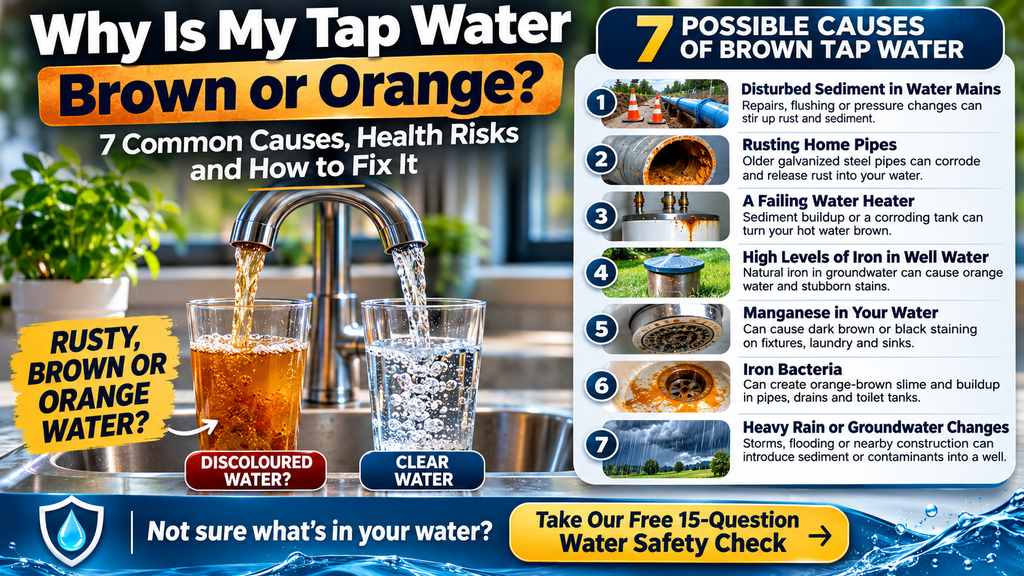
7 Possible Causes of Brown or Orange Tap Water
1. Corroding Pipes Inside Your Home
If your home has older galvanized steel or iron plumbing, this is one of the first things I would investigate. Galvanized steel pipes have a protective zinc coating; when that coating deteriorates, the steel beneath can corrode and shed rusty particles into the water.
Clues include brown water after a period of non-use, orange particles in faucet aerators, reduced water pressure and recurring rust stains. If neighbors have clear water while yours is discolored, the issue may be within your home’s plumbing.
What about lead? Galvanized plumbing connected to lead-bearing components may retain and later release lead-containing particles. Brown water does not prove lead is present, and clear water does not rule it out. Older plumbing deserves appropriate material identification and, where indicated, lead testing.
How to fix it: Ask a qualified plumber to inspect the affected pipework. A sediment filter may capture loose rust but cannot stop a pipe from corroding internally. For more details, read Could There Be Lead in Your Drinking Water? 7 Warning Signs.
2. Disturbed Sediment in Municipal Water Mains
Sometimes the problem has nothing to do with your home. Older water mains can contain accumulated iron deposits and sediment. Fire-hydrant use, routine flushing, street construction, main repairs or sudden pressure changes may disturb those deposits, sending temporarily discolored water into nearby properties.
Ask your neighbors whether they are experiencing the same problem. Check your water utility’s website or contact its water-quality department for reports of maintenance or incidents.
How to fix it: Follow your utility’s specific instructions. Depending on the event, it may recommend waiting or briefly flushing cold taps. Avoid running hot water and washing light-colored laundry while sediment is present. Do not automatically run water for 20–30 minutes without guidance; that may waste water without clearing a disturbed main.
3. A Rusting or Sediment-Filled Water Heater
If only hot water is brown while cold water remains clear, investigate the water heater. Tank-style heaters collect minerals and sediment over time; corrosion can also occur as protective components deteriorate.
Many water heaters contain a sacrificial anode rod. It is designed to corrode instead of the surrounding steel tank—think of it as a bodyguard for the heater. Once depleted, corrosion may eventually affect the tank.
Other clues include rumbling noises, brown hot water after the heater has been unused, leaks or visible corrosion around fittings.
How to fix it: Have a qualified plumber check the tank, maintenance history and anode rod where applicable. Professional flushing, component replacement or a new heater may be appropriate. Water-heater temperature settings involve Legionella-prevention and scalding considerations, so follow professional and manufacturer guidance rather than changing settings solely because the water is brown.
4. High Levels of Iron in Private Well Water
For homeowners using a private well, naturally occurring iron is a common explanation. Some groundwater contains dissolved iron that looks clear when it leaves the tap. After the water is exposed to oxygen, that iron can oxidize into reddish-brown particles.
You might notice orange toilet stains, rusty marks in sinks, yellow discoloration on white laundry, or clear water that turns orange after sitting in a glass.
There is an important distinction between particulate iron, which an appropriately sized sediment filter may capture, and dissolved iron, which passes through ordinary sediment filtration.
How to fix it: Arrange a water test for iron, manganese, pH and related parameters. Depending on the results, treatment may involve oxidation, specialized filtration media or a backwashing system. Some softeners can remove limited amounts of dissolved iron under suitable conditions, but they are not a universal solution.
5. Manganese or Natural Organic Material
Manganese often occurs alongside iron and may produce dark brown or black staining. Naturally occurring tannins from decaying vegetation can also make some well water yellow or tea-colored. These require different treatment approaches.
Although manganese has a US secondary aesthetic standard, elevated exposure also warrants health attention. The World Health Organization established a provisional health-based guideline of 0.08 mg/L for total manganese in drinking water, particularly to protect sensitive groups such as bottle-fed infants.
How to fix it: Use a certified laboratory to distinguish iron, manganese and organic color rather than choosing equipment based on appearance. Treatment depends on concentration and water chemistry.
6. Iron Bacteria in Wells or Plumbing
Some microorganisms interact with iron and produce orange-brown, slimy deposits. These are commonly called iron bacteria. A sticky coating inside toilet tanks, recurring filter clogs or musty odors can be clues.
Iron bacteria are generally a nuisance rather than the same direct threat as disease-causing pathogens, but their presence does not establish that a well is safe. Private wells should be tested for health-related contaminants, including coliform bacteria.
How to fix it: Consult a well contractor for an inspection and an appropriate cleaning or disinfection plan. Poorly designed treatments can damage equipment or allow the issue to return.
7. Flooding, Groundwater Changes or Shifts in Water Treatment
Heavy rain, flooding, nearby construction or damaged well components can allow sediment—and potentially other contaminants—to enter a private well. If a well has been flooded, follow local health authority and EPA guidance before using it again.
Municipal treatment changes can also affect corrosion. The Flint, Michigan water crisis showed the consequences of changing a water source without adequate corrosion control. That does not mean every brown-water event is dangerous, but it does show why unexpected changes deserve investigation.
How to fix it: Contact your utility about source or treatment changes. For private wells affected by flooding or damage, seek professional assessment and appropriate laboratory testing before using the water for drinking.
Is Brown or Orange Tap Water Safe to Drink?
It depends on the cause, and you cannot determine safety by color alone. Iron-related staining may be chiefly aesthetic, but certain plumbing and well-water problems can occur alongside harmful contaminants.
Lead, for example, has no reliable taste, smell or visible appearance in drinking water. Microbial contamination can also be invisible, and boiling does not remove dissolved metals or many chemicals.
If your water suddenly becomes discolored or its cause is unknown, use a known-safe drinking-water source while you check with your supplier or obtain qualified advice. Follow the precise wording of official boil-water, do-not-drink or do-not-use notices; they are not interchangeable.
Could there be other warning signs at home? Take our free 15-question Water Safety Check, which reviews plumbing, odors, staining, water source and testing history. It provides educational suggestions but cannot diagnose contamination.
How to Identify the Cause of Brown Water
| What you notice | Possible cause | Next step |
|---|---|---|
| Brown water at every cold tap; neighbors affected | Municipal sediment disturbance | Call your water utility |
| Only hot water is brown | Water heater or hot-water plumbing | Inspect the heater |
| Water is brown after sitting overnight | Older household plumbing | Check pipe materials |
| Clear well water turns orange in a glass | Dissolved iron oxidizing | Test iron and water chemistry |
| Dark brown or black stains | Manganese or other deposits | Test for manganese |
| Orange slime in toilet tanks | Possible iron bacteria | Ask a well contractor |
| Brown well water after heavy rain | Possible intrusion or well damage | Seek urgent assessment |
This comparison helps narrow down the investigation, but it is not a substitute for testing or inspection.
How to Fix Brown Tap Water: Step by Step
- Check hot and cold taps separately. Hot-only discoloration suggests a water-heater issue.
- Check multiple fixtures. If only one tap is affected, inspect that fixture and its supply line.
- Ask neighbors. A neighborhood-wide change suggests a municipal issue.
- Check official advisories. Your utility may already have identified a cause.
- Inspect older plumbing and the heater. A professional can identify corrosion or equipment problems.
- Arrange laboratory tests when appropriate. Consider iron, manganese, pH, lead, turbidity and, for wells, coliform bacteria and nitrates based on the circumstances.
- Choose treatment only after identifying the cause. Filtration cannot repair a deteriorating pipe or water heater.
Which Water Filter Is Best for Brown Water?
Sediment Filters
Designed to capture certain suspended particles such as rust and grit. They do not necessarily remove dissolved iron, lead, bacteria or chemicals.
Specialized Iron and Manganese Filters
Well-water treatment may use oxidation, backwashing and media selected for the measured contaminant levels and water chemistry. Verify performance claims before buying.
Water Softeners
Primarily designed for hardness reduction. Some systems handle limited amounts of dissolved iron in suitable conditions, but high iron concentrations may foul them.
Certified Drinking-Water Filters
For health-related concerns, choose a filter whose specific contaminant-reduction claim has been independently certified. NSF/ANSI 42 covers particular aesthetic claims, while NSF/ANSI 53 covers particular health-related reduction claims; certification to a standard does not mean every product removes every contaminant.
Before spending money, review Find the Right Water Filter for Your Home.
Five Costly Mistakes to Avoid
- Assuming brown water is always harmless rust. There may be additional concerns that appearance cannot reveal.
- Boiling water to remove metals. Boiling does not remove dissolved lead, nitrates or many chemicals.
- Buying a filter without testing. Equipment for suspended sediment may not remove dissolved contaminants.
- Ignoring repeated discoloration. A recurring problem deserves investigation even if the water eventually clears.
- Washing and heat-drying clothes in rusty water. Rust stains can set, especially with heat.
Frequently Asked Questions
Why is my tap water suddenly brown?
Sudden discoloration is often caused by disturbed sediment in water mains or changes in household plumbing flow. Contact your water utility if multiple cold taps or nearby homes are affected.
Why is my tap water orange?
Orange coloration is commonly associated with iron or rust. Well water containing dissolved iron can turn orange after exposure to air.
Why is only my hot water brown?
The water heater or hot-water plumbing may contain sediment or corrosion products. Ask a qualified plumber to investigate.
Can brown tap water make you sick?
The answer depends on the cause and what else is in the water. Iron staining can be mainly aesthetic, but other contaminants may be present. Water color alone cannot confirm safety.
How long does it take for brown water to clear?
Temporary disturbances sometimes clear quickly, but timeframes vary. Follow your utility’s guidance and report persistent or recurrent issues.
Is it safe to shower in brown water?
That depends on the cause and any local water advisory. Ordinary sediment events may not prohibit bathing, but chemical or microbial concerns can require additional restrictions.
Will a water filter remove brown water?
An appropriate sediment filter may capture suspended particles. Dissolved iron, manganese and other contaminants may require different treatment.
Does brown water mean my home has lead pipes?
No. Brown discoloration is not proof of lead. Older plumbing can contain lead-bearing components, however, and testing can be appropriate.
Can boiling brown water make it safe?
Not necessarily. Boiling is useful for certain microbial hazards when recommended, but it does not remove dissolved metals or many chemicals.
Final Thoughts: Don’t Ignore the Signs
Brown or orange water doesn’t automatically mean your family is drinking dangerous water. But it does mean something needs investigating. Maybe sediment was stirred up during a water-main repair. Maybe your heater or pipes are deteriorating. Or perhaps your private well contains iron, manganese or another contaminant.
The smartest approach is to identify the problem, test when appropriate and choose a solution that addresses the source.
And because some important contaminants have no obvious color, taste or smell, start with our free 15 Warning Signs Water Safety Check. You’ll get a personalised educational overview of possible issues and what to investigate next.
Sources and Further Reading
- US EPA — Secondary Drinking Water Standards
- CDC — Testing Private Well Water
- Portland Water Bureau — Discolored Water
- NSF — Contaminant Reduction Claims
- WHO — Manganese in Drinking Water
This article provides general education, not medical, plumbing or laboratory advice. Follow water supplier and public-health instructions for sudden discoloration or contamination concerns.
Pingback: SpringWell CF1 Review (2026): Worth It? Pros & Cons